Understanding Ventricular Activation with UHF‑ECG

Learn how ultra‑high‑frequency ECG reveals ventricular activation patterns, electrical dyssynchrony, and pacing outcomes beyond conventional ECG.

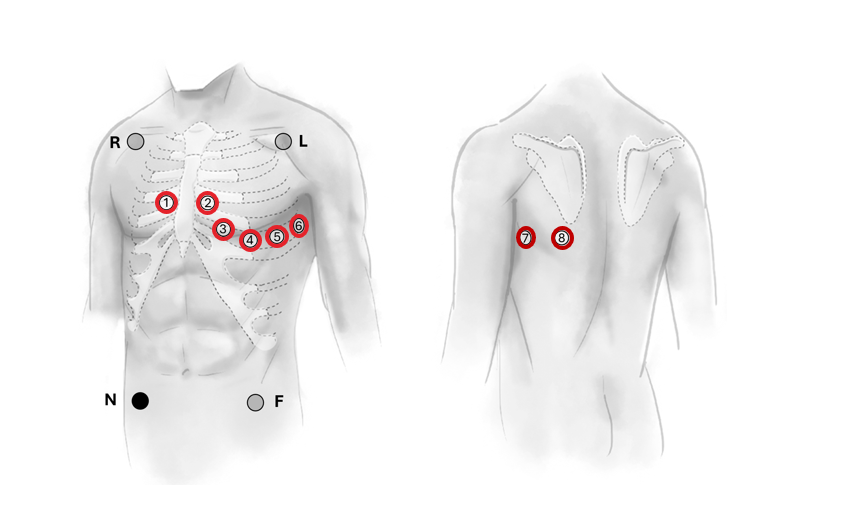
UHF-ECG 12(14)-lead chest electrode positions
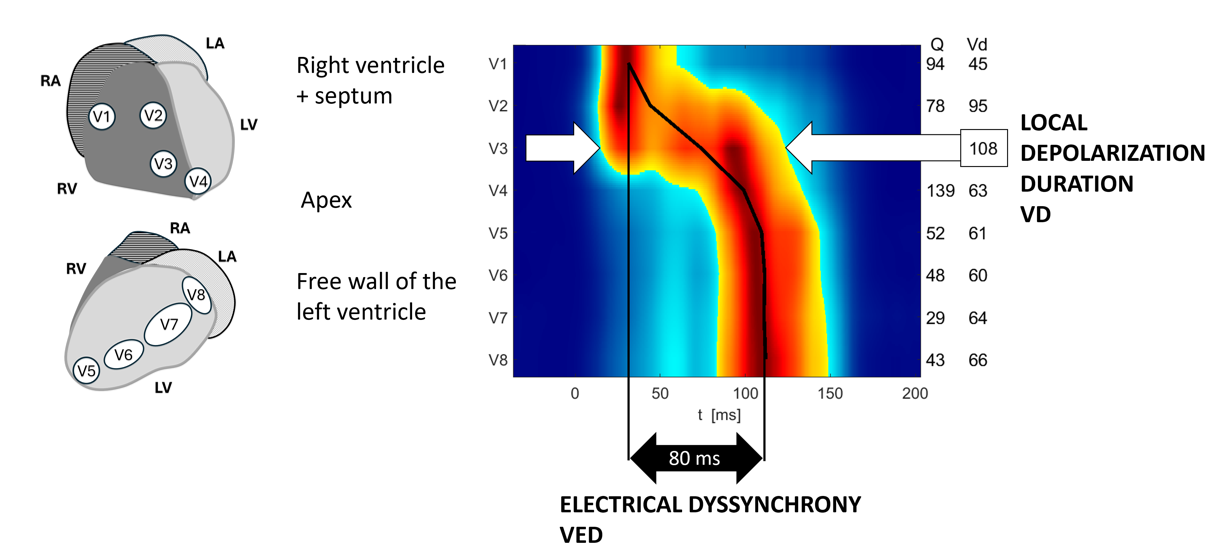
UHF-ECG ventricular activation map and local depolarization duration
01 Basis

How UHF‑ECG Works

UHF‑ECG captures frequency components up to 1000 Hz during ventricular depolarization, enabling visualization of activation timing beneath individual chest leads. In 12(14)-Lead ECG Mapping, standard chest electrodes are used without invasive instrumentation, and recorded signals are transformed into activation maps that show when ventricular regions depolarize beneath each lead.

Non‑invasiveReal‑timePassive recordingStandard chest electrodes
UHF-ECG principle of localized ultra-high-frequency signal detection
02 Principle

UHF‑ECG Principle

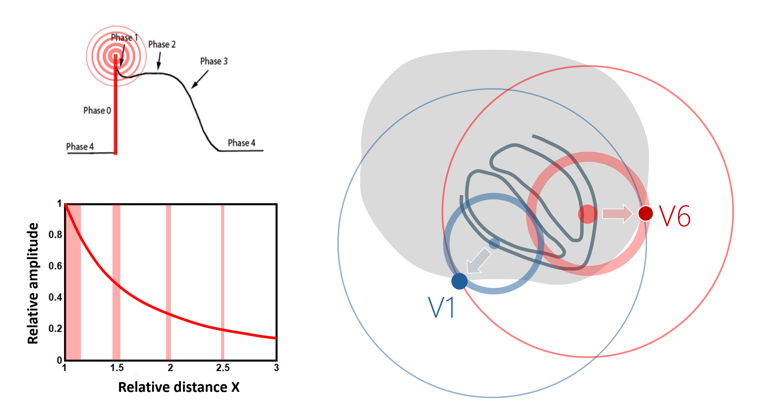
We are providing new information that cannot be fully replaced by any other parameter obtained from a standard ECG. During depolarization, an action potential produces the UHF components up to 1000 Hz detected by highly sensitive VDI UHF‑ECG technology. UHF oscillations attenuate quickly with distance from their source, so the VDI technology can precisely localize depolarized regions.

03 Method

UHF‑ECG Method

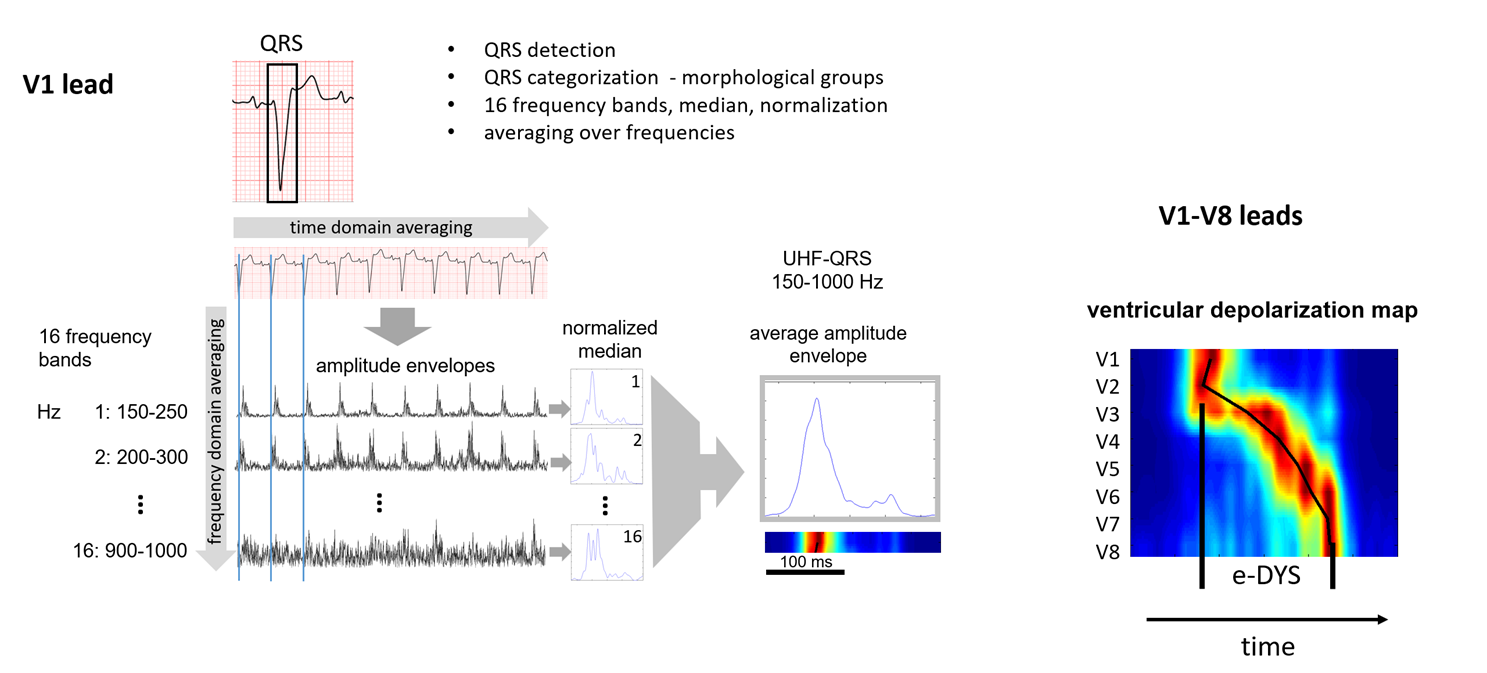
UHF oscillations are extremely weak, requiring patented advanced real‑time signal processing. The method detects and categorizes QRS complexes, analyzes multiple frequency bands, normalizes and averages amplitude envelopes, and converts the processed UHF‑QRS signal into a ventricular depolarization map.

UHF-ECG real-time signal processing method
04 Activation

Activation Patterns

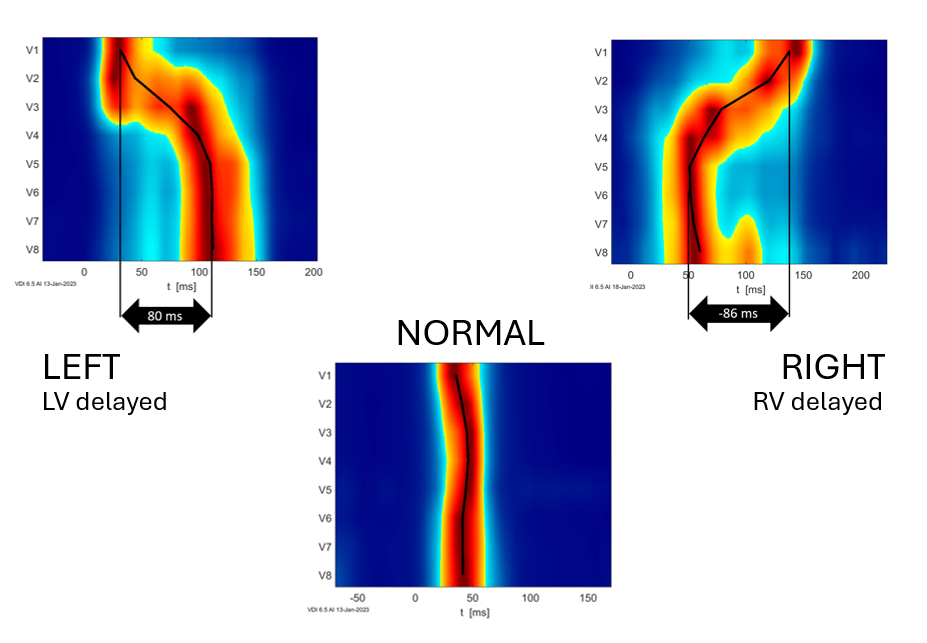
Activation maps clearly show ventricular activation patterns and help distinguish delayed left ventricular activation, synchronous activation, and delayed right ventricular activation.

UHF-ECG activation patterns

Left Delayed

Typical left bundle branch block pattern with delayed LV activation.

Synchronous

Physiological ventricular activation with minimal delay between chest leads.

Right Delayed

Typical right ventricular delay pattern, visible as a shifted activation sequence.

Synchronous

Synchronous UHF‑ECG Activation

All ventricular segments under the chest leads are activated almost at the same time.

Dyssynchronous

Dyssynchronous UHF‑ECG Activation

Dyssynchronous activation shows a significant time delay between individual chest leads.

VDI UHF-ECG Atlas cover
05 Atlas

VDI UHF‑ECG Atlas

A curated collection of real‑world activation maps demonstrating spontaneous conduction, bundle branch block patterns, conduction system pacing, CRT optimization, and ventricular pacing strategies.

Spontaneous activationCSPCRTRV pacing

Open Atlas PDF

06 FAQ

UHF‑ECG FAQs

It captures frequencies up to 1000 Hz during QRS and provides information about ventricular depolarization in selected ventricular segments that a standard ECG cannot directly visualize.
It provides an activation map that visualizes the timing and sequence of ventricular activation. The main numerical parameters include electrical dyssynchrony and local activation duration.
Yes. The measurement is passive and non‑invasive, using standard chest electrodes.
It supports CRT, conduction system pacing, assessment of dyssynchrony, and evaluation of conduction abnormalities.